

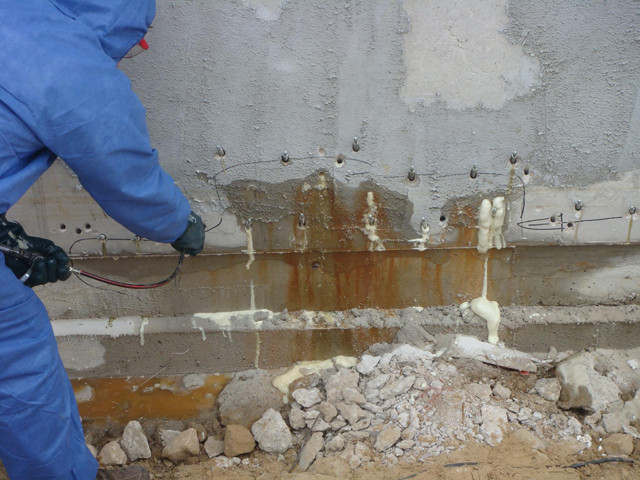
When a structure is leaking, the visible damp patch is rarely the whole story. Water travels through cracks, joints, porous concrete, construction defects, and behind-wall pathways — often emerging far from where it entered.
Injection waterproofing is the specialist tool for these scenarios because it:
- Stops active leaks without excavation, and
- Can treat hidden pathways where surface coatings or membranes won’t reach.
PCR’s injection waterproofing focuses on water control, not structural bonding (that sits under our Remediation crack injection service). Here, the goal is to cut water, seal the pathway, and stabilise the detail so the leak doesn’t return.
✅ Our Injection Waterproofing Packages Typically Include:
Leak assessment & pathway diagnosis
- Identify likely water entry points and travel routes
- Determine whether leaks are through cracks, joints, voids, or behind-wall pathways
- Decide on the most effective injection strategy: PU vs acrylic curtain injection
Preparation & set-up
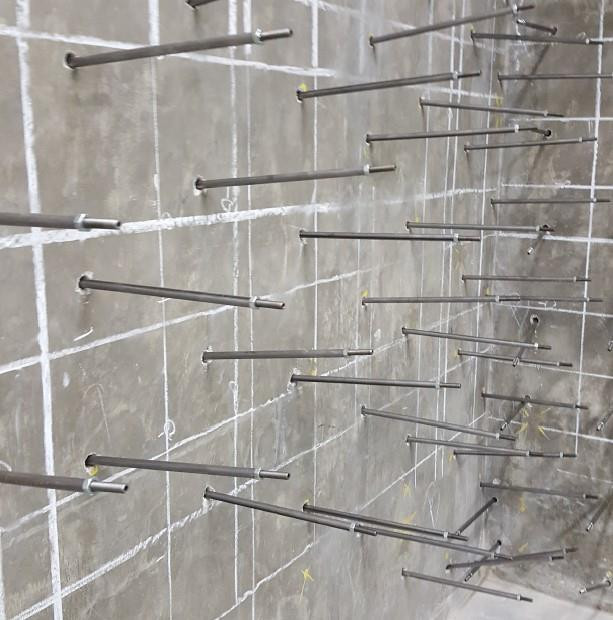
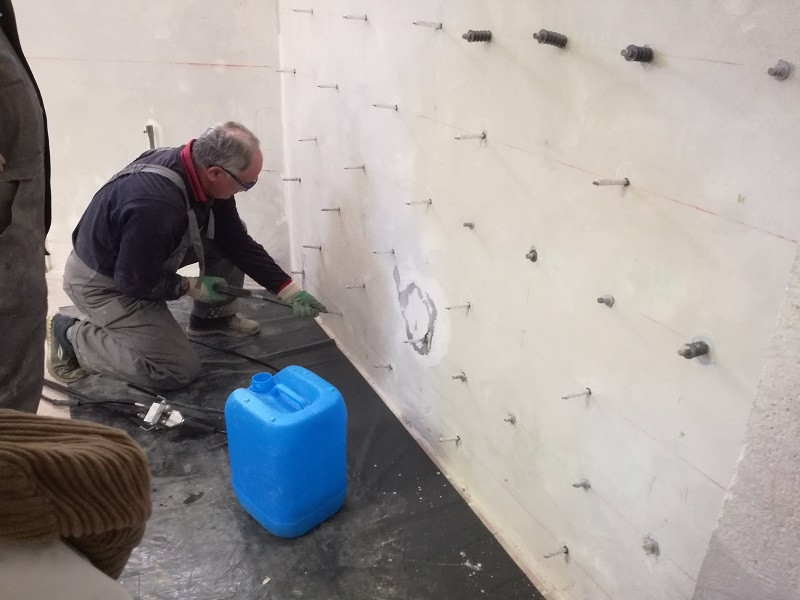
- Port/packer layout and drilling strategy suited to the structure and leak mechanism
- Surface sealing where required to control resin travel
- Staging and sequencing to avoid “chasing” water around the structure
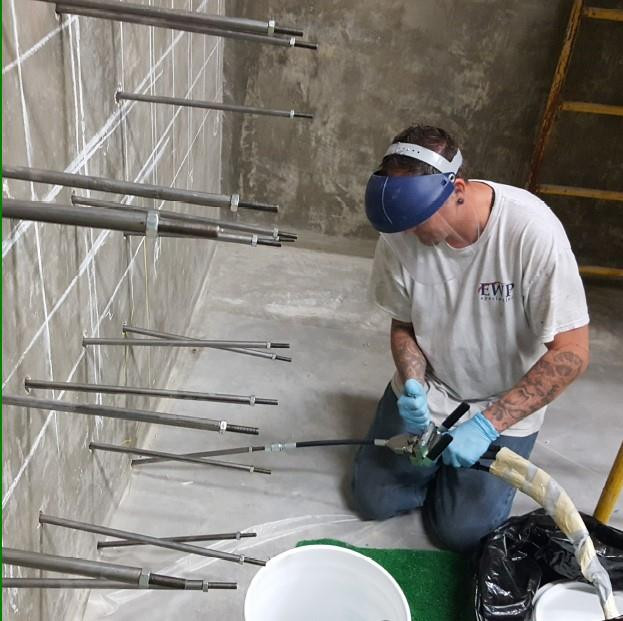
PU injection (water-cutting + flexible sealing)
- Fast response for active leaks and high-flow points
- Flexible seal suited to minor movement and wet/dry cycles
- Used for cracks, joints, and localised leak points
Acrylic gel / curtain injection (behind-wall barriers)
- Low viscosity systems suited to fine pathways and porous zones
- Curtain injection to form a waterproof “screen” behind retaining/basement walls
- Ideal where the leak path is not a single crack line, or where external access is impossible
Make-good & reinstatement
- Port removal and patching
- Reinstatement of finishes where required
- Photo records and QA documentation aligned with PCR’s ISO systems
🧪 System Selection: PU vs Acrylic (simple clarity)
Polyurethane (PU) Injection
Best when:
- Leaks are active and need immediate water-cutting
- You need a flexible seal that tolerates minor movement
- The leak path is through a crack, joint, or defined interface
Acrylic Gel / Curtain Injection
Best when:
- Water is tracking behind walls, through porous zones or complex pathways
- The ingress route is not clearly defined as one crack
- You need to create a wider barrier zone (“curtain”) without excavation
In many projects, PCR uses a combined strategy: PU to stop active flow first, then acrylic curtain injection to treat broader pathways and prevent recurrence.
🏗 Typical Applications
- Retaining walls and basements (internal-only access)
- Lift pits and wall/floor junctions under pressure
- Construction joints and cold joints
- Penetrations, tie holes, drossbach ducts and void pathways
- Leaks in live operational environments where downtime is costly
🛠 Project Types We Service
- Commercial basements and car parks
- Council and infrastructure assets
- Water and wastewater facilities
- High-end residential basements and retaining walls
- Remedial waterproofing where prior membrane/coating attempts have failed
📌 Why Choose PCR?
- We’re leak-path focused — not “inject and hope”
- Strong system selection: PU for water-cutting + acrylic for curtain barriers
- Ability to integrate injection with negative-side waterproofing and detailing
- Practical delivery on live sites with safety, access, and programme constraints
- ISO-backed QA documentation and traceability
.jpeg)