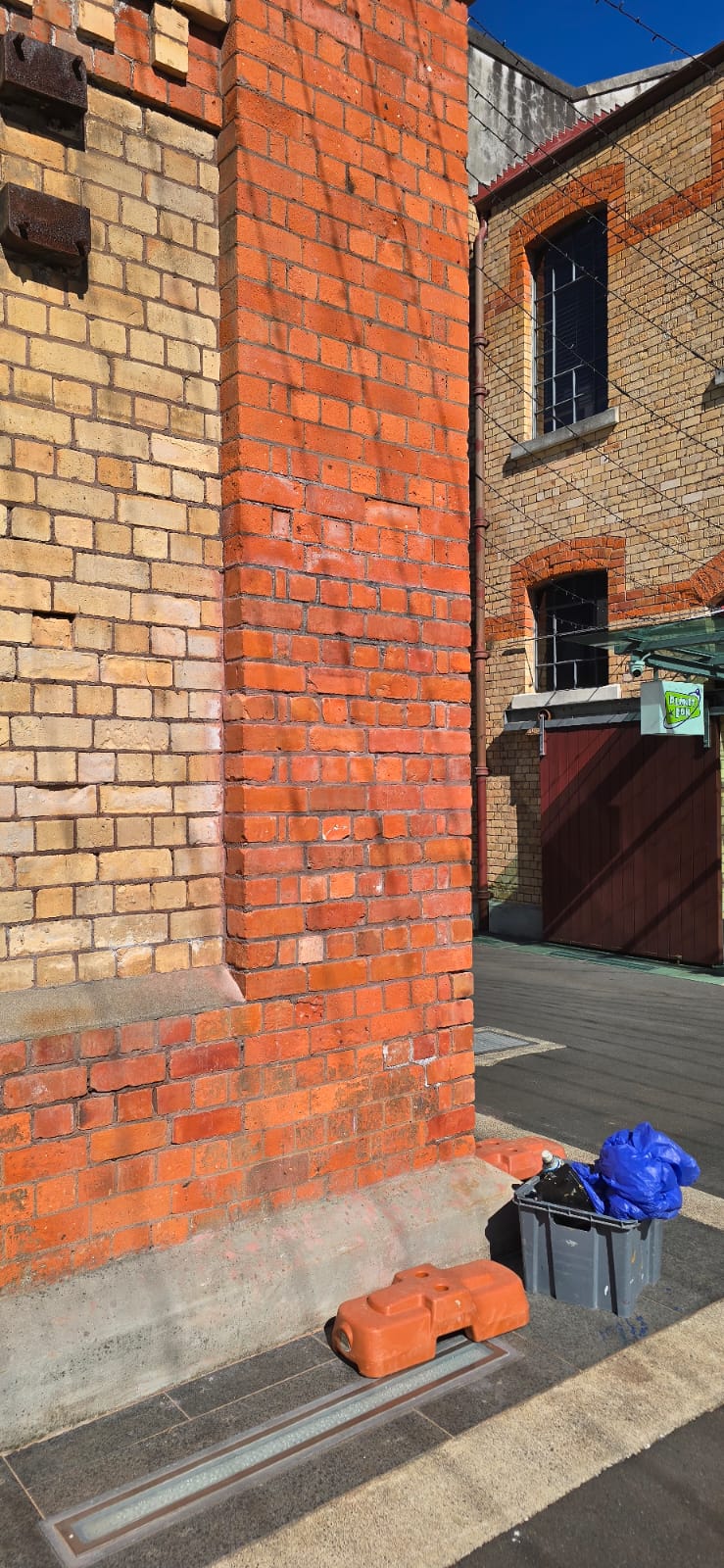

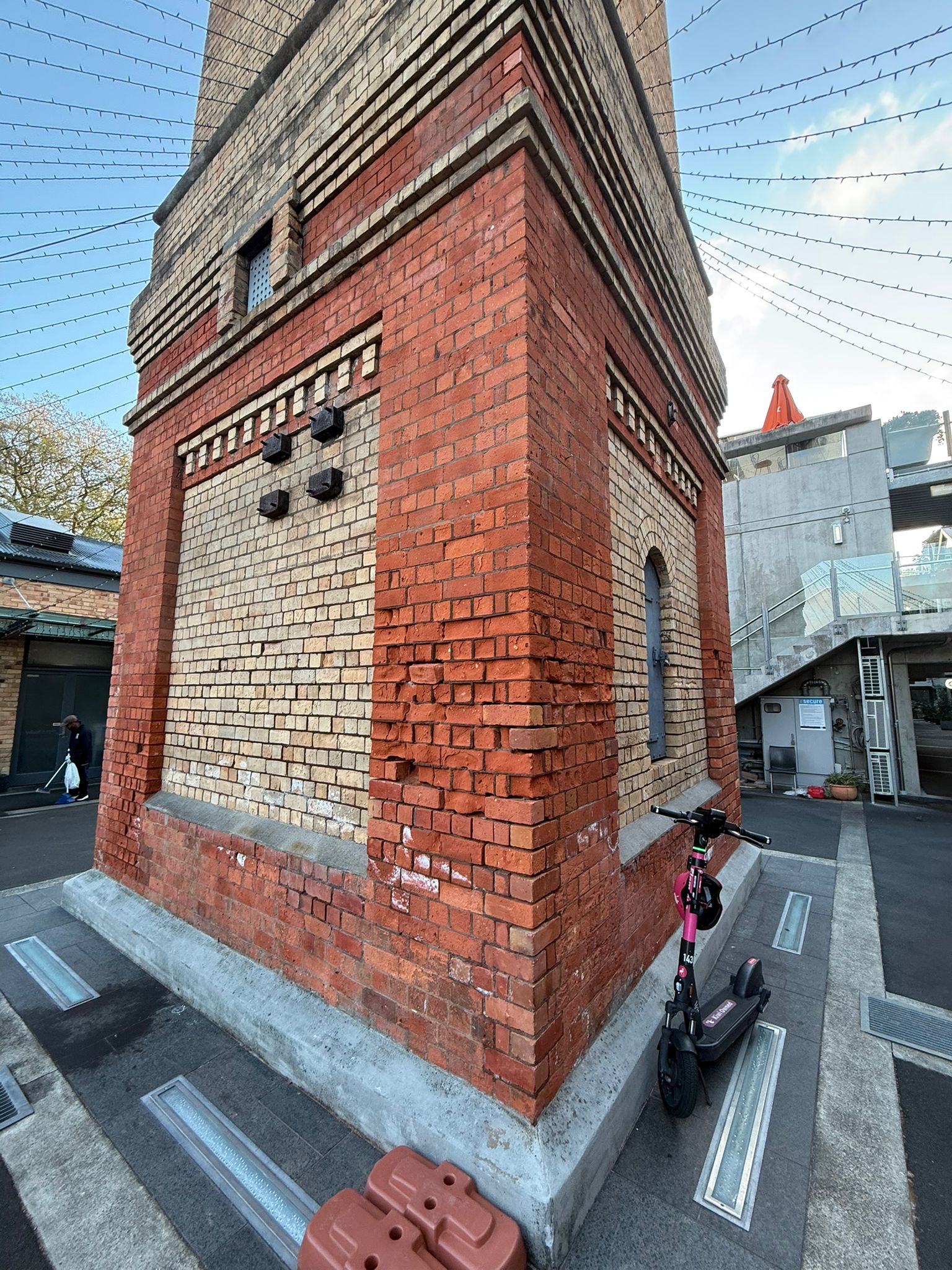
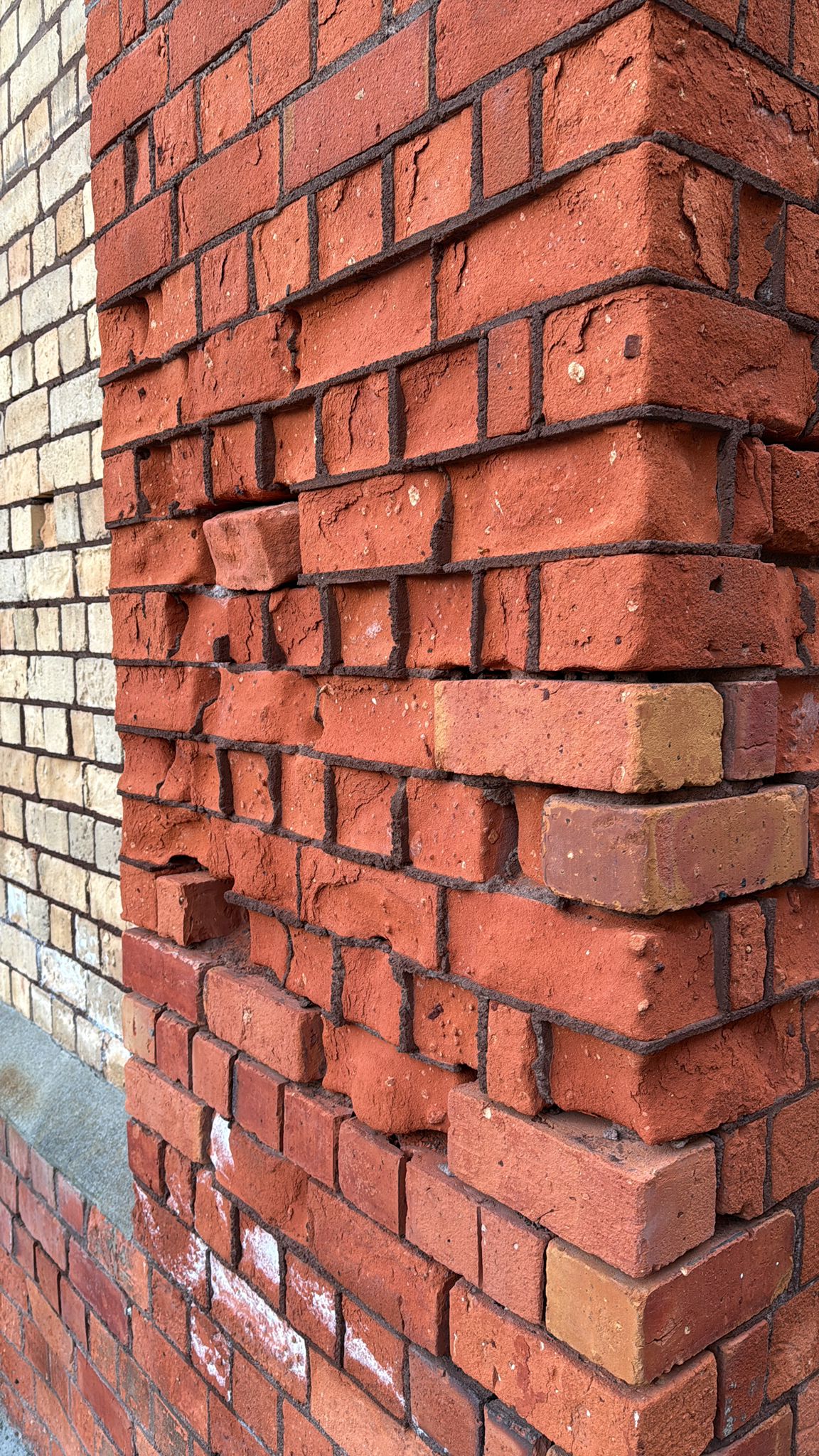
Brick façades don’t usually “fail” because the bricks disappear — they fail because joints open up, moisture gets in, and movement or corrosion-related issues start showing through. Once mortar starts crumbling or separating, the wall becomes more absorbent and deterioration accelerates, especially around parapets, window heads, copings and exposed corners.
PCR approaches repointing and replacement as a restoration discipline, not a cosmetic tidy-up. The goal is to reinstate a façade that is:
- weather-resilient,
- structurally stable, and
- visually consistent with the existing building.
Our Brick Repointing & Replacement Packages Typically Include:
Condition assessment & scope definition
- Identify failed joint zones, cracking patterns and high-exposure areas
- Check for underlying drivers: movement, moisture traps, failed flashings/copings, corroding steel lintels/ties, incompatible past mortars
- Define repointing extent (localised vs elevations) and brick replacement requirements
Mortar removal (controlled, damage-free)
- Careful raking/removal of failed mortar to the correct depth
- Avoiding brick edge damage (arrises) and minimising dust/impact to the substrate
- Cleaning out joints to provide a sound base for new mortar bond
Repointing & finishing
- Repointing with a mortar selected to suit the building and exposure
- Joint finishing to match the existing style and tooling profile
- Managing curing conditions to support bond, durability and consistent appearance
Brick replacement
- Removal of damaged/spalled bricks and reinstatement with suitable replacement units
- Localised rebuilding where necessary (corners, parapets, reveals)
- Integration with adjacent repairs so the wall reads as one, not patchwork
Crack management & stabilisation (where required)
- Crack stitching or ties where specified to stabilise masonry cracks
- Localised anchoring to reinstate stability around openings or parapets
Optional integration works
- Gentle cleaning / steam cleaning to unify appearance after repairs
- Protective treatments (breathable water repellents / anti-graffiti) where specified
🏗 Typical Applications
- Heritage and civic buildings
- Commercial façades and older brick elevations
- Parapets, boundary walls and exposed corners
- Around openings (windows/doors) and lintel zones
- Areas with chronic dampness, salt staining or repeated patch repairs
🛠 Common Problems We Solve
- Crumbling, soft or missing mortar joints allowing water ingress
- Open joints causing wind-driven rain penetration and internal dampness
- Spalled bricks from moisture + salts / freeze-thaw-style breakdown in exposed locations
- Cracks that reappear because joints were repointed without addressing movement/stability
- Patchy façades from multiple past repairs with mismatched mortar and finish
📌 Why Choose PCR?
- Restoration-led approach: compatible repairs that match the existing building
- We treat joints as part of façade performance, not just appearance
- Ability to integrate masonry repairs with concrete façade remediation, anchoring, cleaning and protective systems
- Practical delivery on live sites with access and public safety constraints
- ISO-backed QA process and traceable documentation
.jpeg)
.jpeg)
.jpeg)